- 4721 W. Jennifer Ave. #14 Fresno, CA 93722
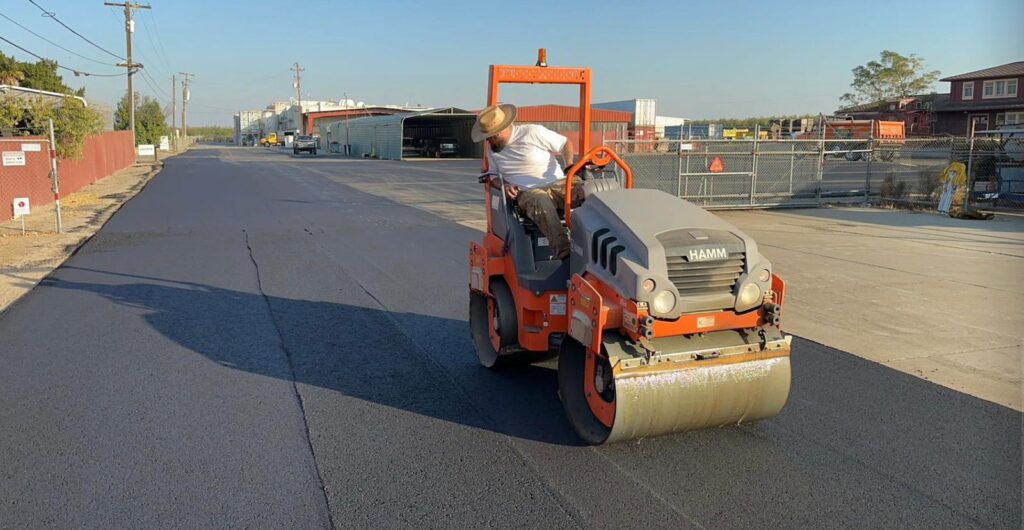
Asphalt paving in Coarsegold is not always as simple as preparing a flat surface and laying new pavement.
Properties throughout the area can include long driveways, sloped entrances, private roads, rural access areas, and elevation changes that place very different demands on pavement than a typical suburban driveway.
That is why a successful asphalt project starts below the finished surface.
The condition of the base, the way water moves across the property, and how the pavement responds to slope and traffic can all influence how well a driveway or private road performs over time.
For property owners considering asphalt paving in Coarsegold, CA, understanding these factors can help explain why proper preparation is just as important as the asphalt itself.
Coarsegold Properties Create Different Paving Challenges
Coarsegold sits in the Sierra Nevada foothills, where elevation and terrain can change considerably even across relatively short distances. The area also experiences hot, dry summers followed by a considerably wetter period during the cooler months.
For asphalt, that creates several things to consider.
A sloped driveway needs to move water away efficiently. A long private road may experience different traffic loads across different sections. Edges can become vulnerable where pavement meets soil or gravel, and low areas can collect runoff during periods of heavier rain.
The asphalt surface may be what property owners see, but many pavement problems begin underneath or alongside it.
A Strong Asphalt Surface Starts With the Base
One of the most important parts of any paving project is the foundation underneath the asphalt.
If the base is unstable, poorly compacted, or affected by drainage problems, installing new asphalt over it does not automatically solve the underlying issue.
Over time, weak areas underneath the pavement can contribute to:
Proper site preparation helps create a more stable surface for the asphalt placed above it.
This becomes particularly important on Coarsegold driveways and private roads, where properties may include slopes, longer travel distances, or transitions between paved and unpaved areas.
Drainage Matters More on Sloped Driveways
Water is one of the biggest factors to consider when evaluating any paved surface.
On a flat property, poor drainage may create puddles or low spots. On a sloped property, runoff can move quickly across or alongside the pavement and gradually affect shoulders, edges, and the material supporting the asphalt.
The objective is not simply to stop water from touching the pavement. Asphalt is built to handle outdoor conditions.
The important issue is making sure water has a practical path away from the surface instead of repeatedly collecting underneath it or eroding areas around it.
Before paving a long or sloped driveway, it is worth considering:
Addressing those conditions before paving can produce a much better long-term result than treating drainage as an afterthought.
Long Driveways and Private Roads Need a Different Approach
A residential driveway close to the street and a long private road serve the same basic purpose, but they do not necessarily experience the same conditions.
Longer paved areas can include curves, hills, entrances, parking areas, turnaround points, and sections exposed to different traffic patterns.
Private roads may also handle:
Those factors should be considered when planning the project.
Eagle Asphalt offers both driveway paving and subdivision/private road paving, allowing the paving approach to be matched to how the surface will actually be used rather than treating every property the same way.
Is the Problem on the Surface or Underneath It?
This is an important distinction.
Some asphalt problems are primarily surface-level. Fading, light oxidation, and minor wear may indicate that the pavement is aging but still structurally sound.
Other symptoms can suggest something more significant is happening.
Property owners should pay closer attention when they notice:
Those conditions may require more than cosmetic maintenance.
A professional evaluation can help determine whether the pavement needs asphalt repair, resurfacing, drainage correction, or more extensive paving work.
Sealcoating Protects Asphalt—But It Cannot Fix Structural Problems
Sealcoating is an important maintenance option when asphalt is still in good overall condition.
It can help protect the surface from sun exposure, moisture, vehicle fluids, and everyday wear while restoring the darker appearance associated with maintained asphalt.
But sealcoating is not designed to repair an unstable base, sinking pavement, major potholes, or drainage problems.
That distinction is especially important for older driveways.
If the pavement only shows surface wear, protection may be the right approach. If sections are already failing, those areas should normally be addressed before applying a protective coating.
The goal should always be to select the service that matches the actual condition of the pavement.
Repair, Resurface, or Repave?
Not every damaged driveway in Coarsegold needs complete replacement.
The right solution depends on how widespread the deterioration is and what is happening beneath the surface.
Asphalt repair may make sense when damage is limited to specific areas. Potholes, localized cracking, edge failures, and individual weak sections can sometimes be corrected without rebuilding the entire pavement.
Asphalt resurfacing may be appropriate when wear is widespread across the surface but the underlying pavement remains suitable for a new asphalt layer.
New asphalt paving or reconstruction may become necessary when the existing pavement or base has deteriorated beyond what surface treatments or isolated repairs can reasonably correct.
Eagle Asphalt provides all of these services, allowing property owners to evaluate the condition first rather than automatically assuming the most extensive option is necessary.
Do Not Ignore the Edges of Your Driveway
Driveway edges often show problems before the middle of the pavement does.
This is particularly relevant on properties where asphalt borders loose soil, gravel, vegetation, or sloped ground.
When support along the edge begins to weaken, the asphalt may crack or crumble outward. Continued traffic near those areas can make the deterioration spread.
Keeping an eye on edges, drainage, and shoulders can help identify problems before they move farther into the paved surface.
For longer driveways and access roads, inspecting the entire route periodically is especially useful because trouble spots may develop far away from the house or primary parking area.
Planning Asphalt Work Before Problems Spread
The best time to evaluate pavement is not necessarily when it has already become difficult to drive on.
Small cracks, drainage concerns, edge deterioration, and isolated low areas can provide early warning that a section of asphalt needs attention.
Having those conditions evaluated while repair options are still available can help property owners make a more informed decision about maintenance.
It also gives the contractor an opportunity to consider the complete property—not just the visible damage.
Asphalt Paving & Driveway Services in Coarsegold, CA
Every Coarsegold property is different.
Some need a straightforward driveway repair. Others have long private roads, steep approaches, worn pavement, drainage concerns, or surfaces that have reached the point where resurfacing or new paving makes more sense.
Eagle Asphalt provides asphalt paving, driveway paving, private road paving, access road construction, resurfacing, asphalt repairs, crack filling, and sealcoating in Coarsegold, CA.
Our goal is to evaluate what the pavement actually needs and recommend a solution based on the condition of the surface, base, drainage, traffic, and property layout.
If your driveway or private road is cracking, sinking, holding water, or simply showing its age, contact Eagle Asphalt to request an estimate and find the right approach for your property.
Call (559) 538-5414 to request a free estimate.